
News
Maximising Kenya’s Potato Potential authored by WPC Inc. Media Partner Cedric Porter of World Potato Market
The below article is a recent publication by World Potato Markets, a media partner of the World Potato Congress Inc. The WPC Inc. is grateful for the support of our official media partners, including the World Potato Markets, as we work together with the local organizers of the 13th World Potato Congress to share insights into the Kenyan potato industry and the organizations and people who are passionate about its success and growth.
World Potato Markets publishes weekly reports on global potato and potato product output, prices, demand and trade. We are pleased to also share that the Owner and Editor of WPM, Cedric Porter, will be speaking at the 13th World Potato Congress in Naivasha, Kenya.

Maximising the potato’s potential
A growing population, increased export demand, adoption of technologies, and increased breeding of improved varieties provide opportunities for the Kenyan potato industry, according to Severino Manene, Kenya’s Assistant Director for Agriculture, Horticulture Division, Ministry of Agriculture & Livestock Development, when he spoke to World Potato Markets ahead of the World Potato Congress in October this year.
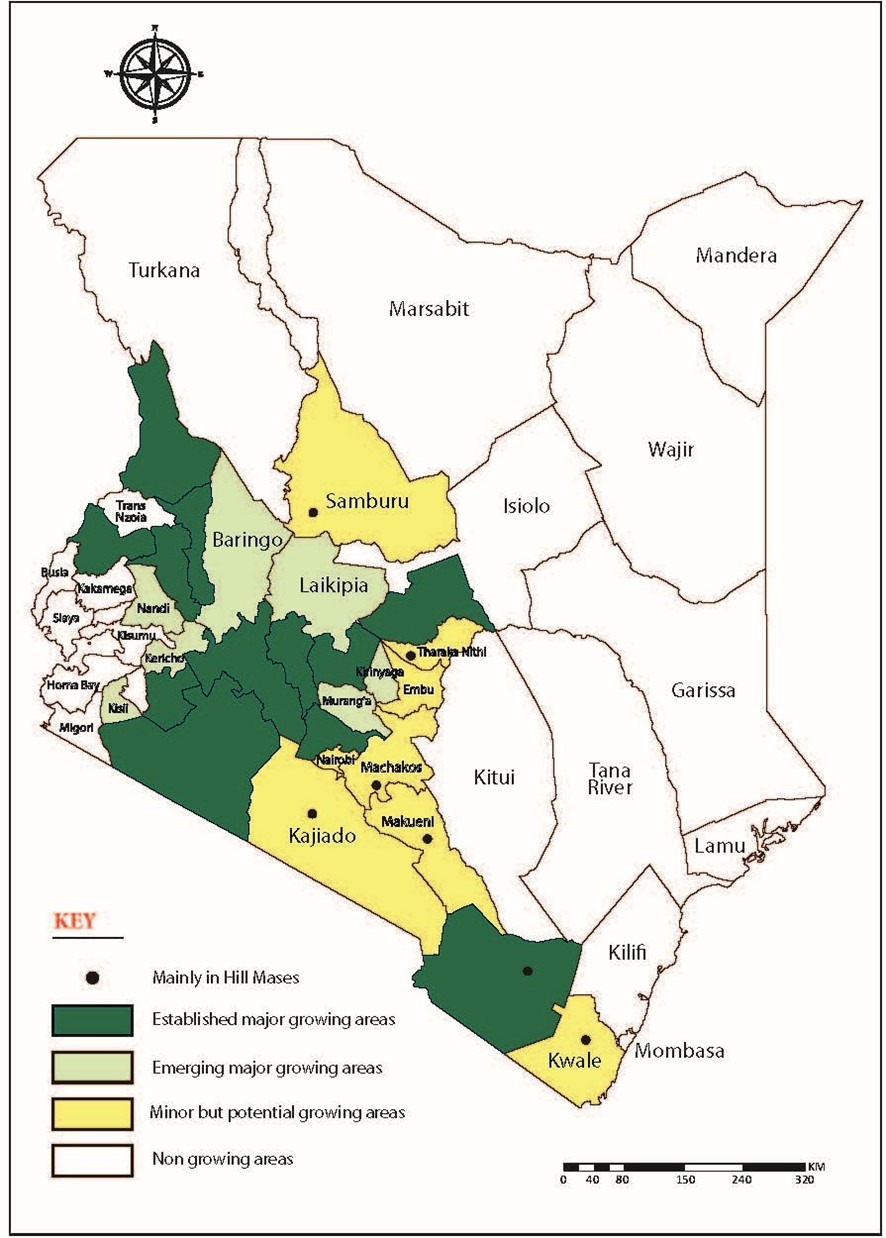
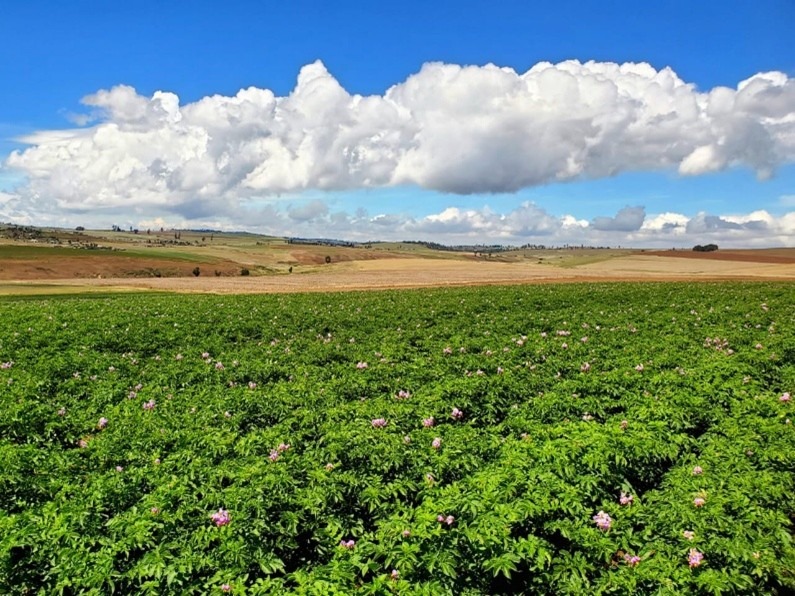
“Potatoes are grown in different regions across the country. The crop is mainly grown in 29 out of the 47 counties in the country, with 16 major and 13 minor growing counties. These areas fall within the altitudes 1,500 to 3,000 metres above sea level focused in the mountainous region, mainly in Western, Rift Valley, Eastern and Central part of the country.”
Much of the main potato-growing region is ideally suited to the crop with rainfall of between 1,200mm and 1,800mm a year and temperatures ranging from 15°C and 24°C. Meanwhile, investment in irrigation and technology is opening up other regions to potato growing.
“About 90% of Kenyan potato production takes place on small-scale farms of between half an acre to two acres. Production on large-scale commercial farms is commonly done under irrigation,” said Manene.
On those smaller farms, 90% of what is produced is sold to the local market. Potatoes are often grown as pure stand, but rotated with maize, beans and other crops.
Potato Production
There are two main potato-growing periods. One during the Long Rains season from the beginning of October to the end of December and one during the Short Rains period from the beginning of March until June, when the majority of the crop is grown. Growers with irrigation can produce in other times of the year giving them an advantage.
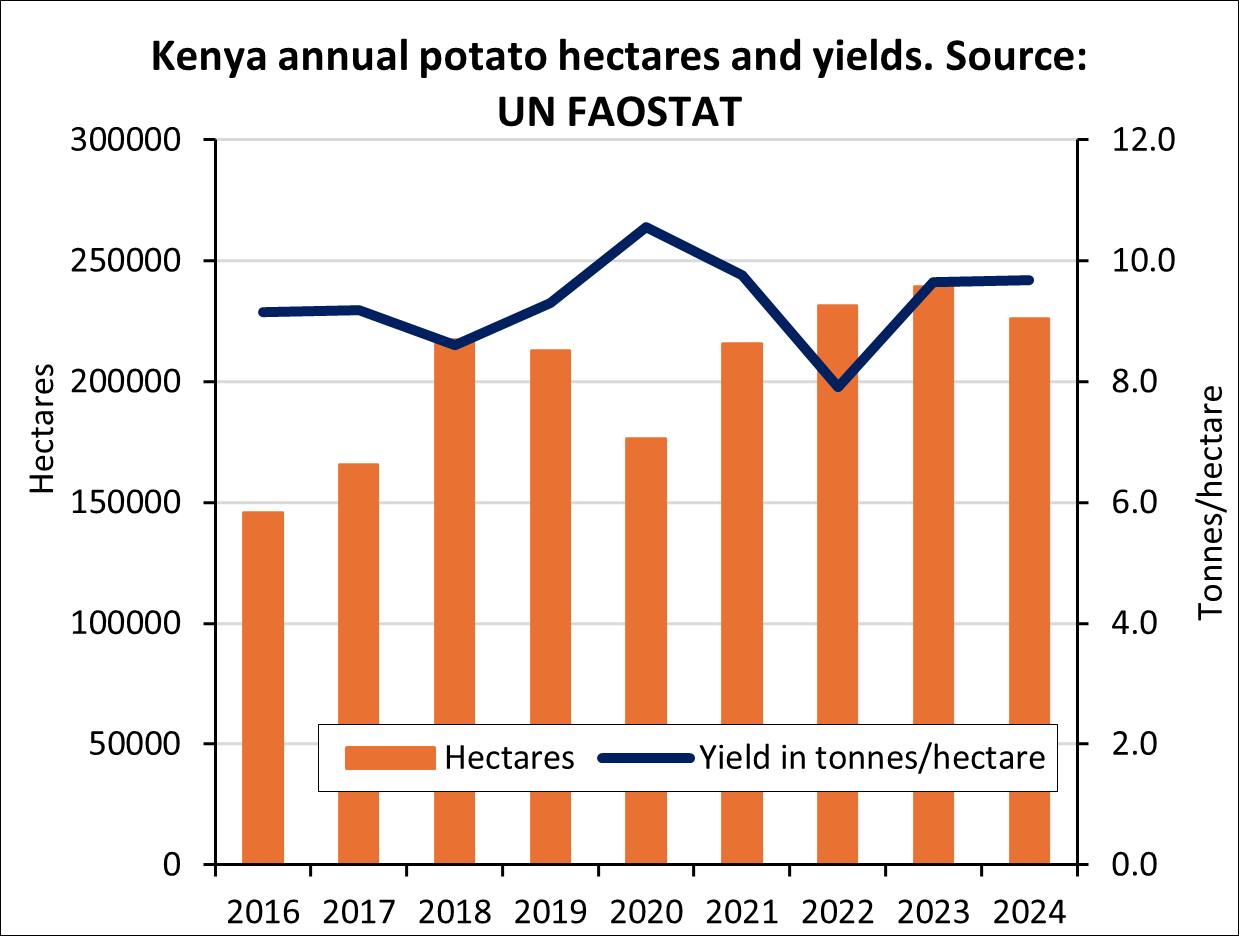
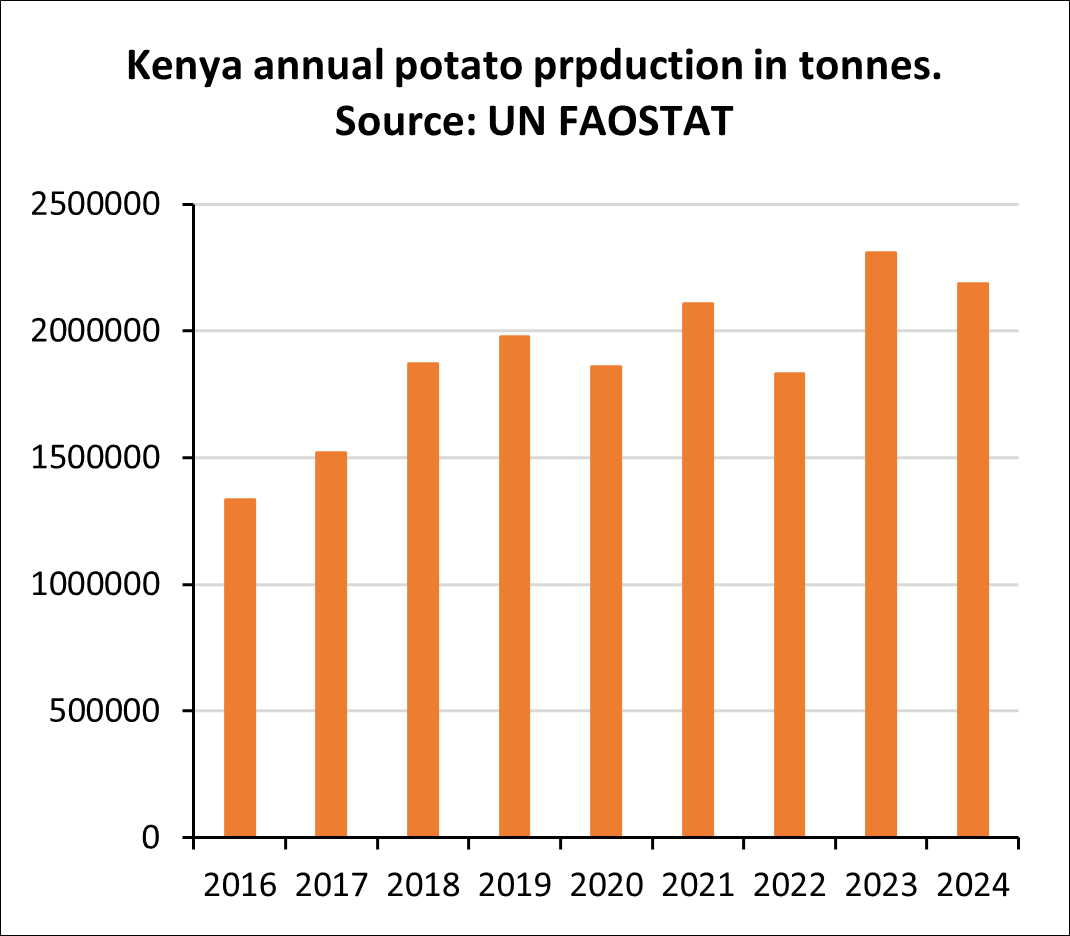
Potato production ranges from 2 – 2.5 million tonnes. In 2024 2.118 million tonnes of potatoes were produced in Kenya, according to UN FAOSTAT making it the 31st largest grower in the world and the 5th largest in Africa, after Egypt, Algeria, South Africa and Morocco.
In 2024 Kenya harvested the 13th largest potato area in the world at 225 950 hectares, nestling between Egypt and France. It was estimated in 2023 that the potato value chain, added 61 billion Kenyan shillings (US$470 million) to the country’s economy.
The country’s potato industry is small but growing.
Nine Aims
Manene said current yields are about 10 tonne/hectare, but the potential is for yields of between 30 – 40 tonnes a hectare, but that is not being achieved due to a variety of challenges including, lack of crop rotational (increasing population) leads to land fragmentation), threats from pests and diseases, and a lack of Climate Resilient Varieties.
Since 2016 Kenya’s potato industry has been guided by the National Potato Strategy, published by the National Potato Council of Kenya in partnership with Ministry of Agriculture and Livestock Development, and other partners . The current strategy has nine aims:
- Strengthened institutional, legal and regulatory framework;
- Enhanced research in the potato industry;
- Potato variety development and seed production;
- Increased potato production;
- Post-harvest management, value addition, marketing and utilisation;
- Enhanced import, export and trade;
- Enhanced use of data management tools;
- Increased participation of youths and women in potato value chain businesses;
- Enhanced industry coordination and funding.
Lack of Cold Storage
Potato breeding is undertaken by the Government’s KALRO agency (Kenya Agricultural & Livestock Research Organisation, in collaboration with other partners such as the International Potato Centre (CIP). They are working together to develop and disseminate improved potato varieties, which are suitable for local conditions and meet market demands.
“There is a need for climate resilient varieties, including those that can withstand disease such as late blights, and the ones that can withstand erratic weather patterns due to Climate Change phenomena,” said Manene.
A lack of potato storage and cooling facilities means that there are limited options as to when growers sell their stocks potatoes which does not allow them to maximise crop values. The Government is supporting construction of cold storage facilities, which are managed by Farmer Producer Groups (FPGs) and Farmer Co-operatives.
This gives growers greater flexibility in selling their potatoes throughout the year. Growers are also being encouraged to join marketing groups to give them more strength within the potato value chain and reduce reliance on ‘middlemen’ in selling of potatoes.
“There is a lot of potential for the Kenyan potato industry. The population continues to grow and the movement of people from the countryside to towns provides opportunities. Meanwhile, export opportunities are increasing too,” said Manene.
Population Growth
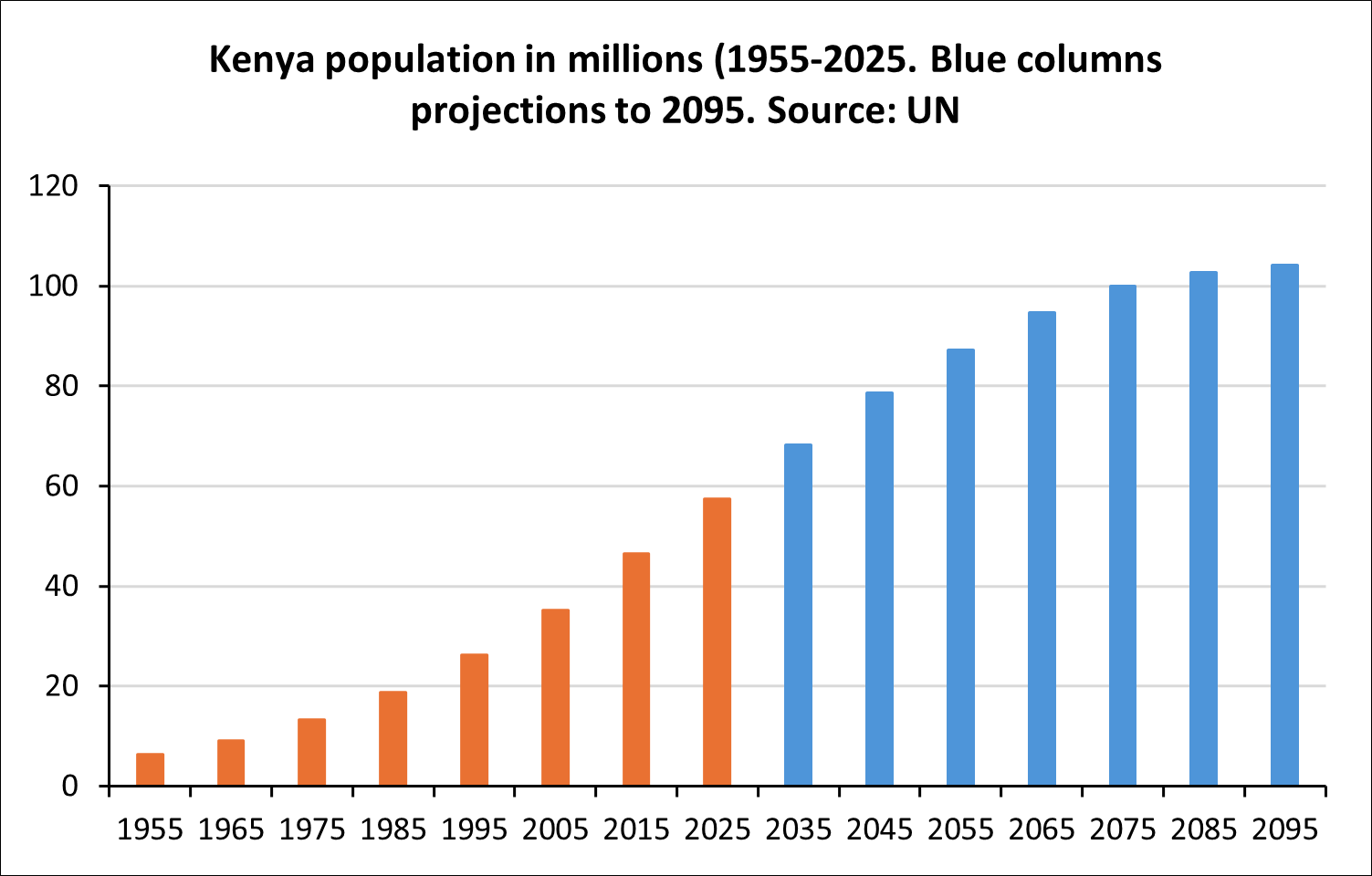
The population of Kenya was estimated at 53.3 million people in mid-2025, according to Kenya’s National Bureau of Statistics, with growth of almost 2% a year. Latest UN median population estimates show that the population could be 82 million by 2025 and top 100 million sometime in the 2070s. Data from the Population Matters organisation shows that 30% of the country is urban and that is forecast to increase to 50% by 2050, with an urbanisation growth rate of 3.4% a year. The capital Nairobi has a population of 4.4 million, with 1.2 million people living in the coastal city of Mombasa. There are five other cities with populations of more than 300 000. The increase in population means that potato consumption is falling, despite stable production. UN Food and Agriculture Organisation figures show that average potato and potato product consumption in 2023 was 29.7 kilograms a head a year, which down from 32.1/kg/person/year 10 years before.
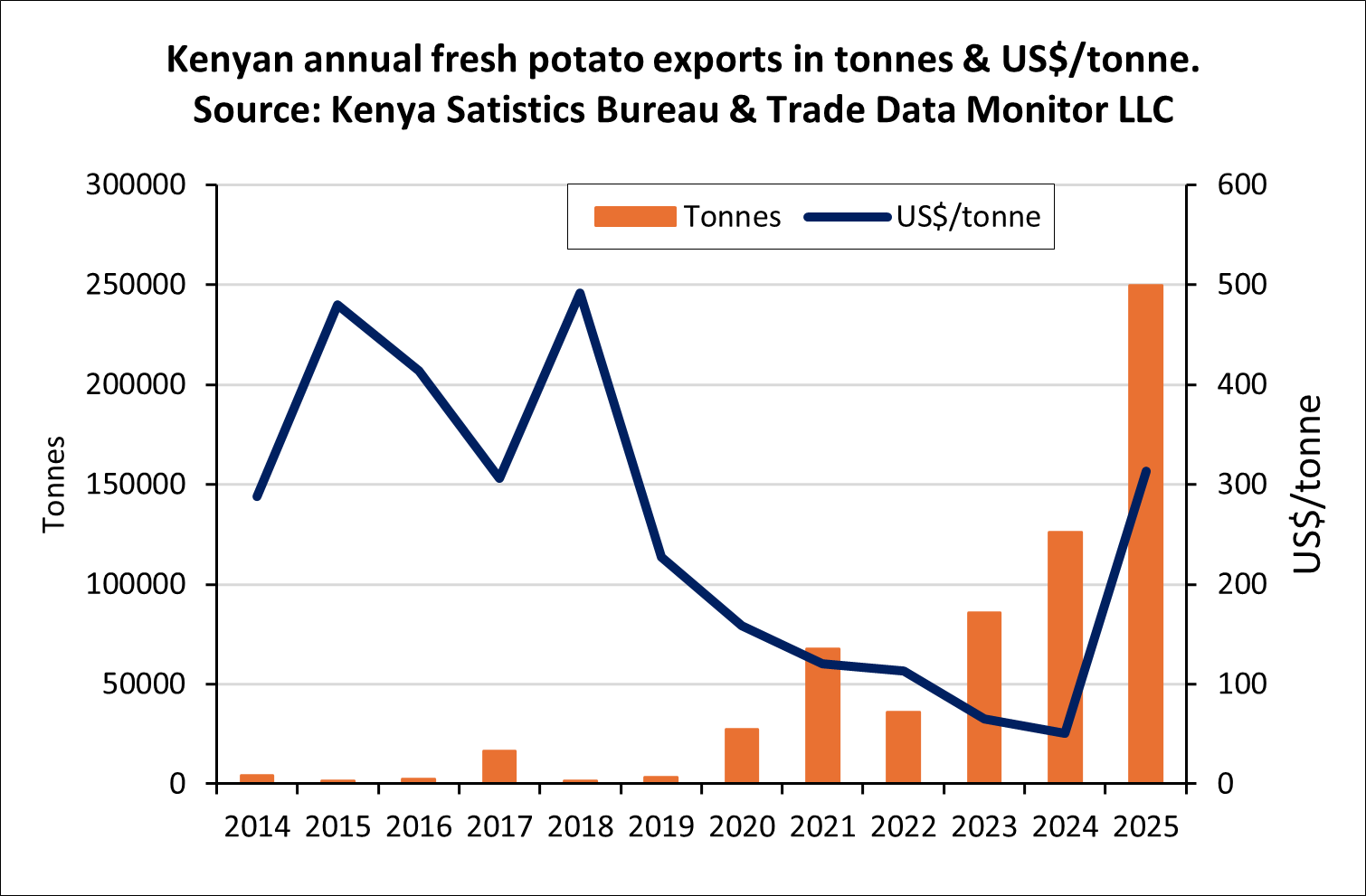
There is evidence of increased trade in potatoes. Kenyan customs data shows that the export of fresh potatoes is variable from year to year, with the vast majority of trade with neighbouring Uganda. National statistics data shows that in 2025 almost 250,000 tonnes of fresh potatoes were exported by Kenya, which was up 97.6% on the 2024 figure. Uganda accounted for all but 760 tonnes of the trade, with South Sudan taking 595 tonnes. There has been a steady increase in exports since 2020, with the 2025 total a record. The average price of Kenyan fresh potato exports fluctuates. In 2025 it was at an average of US$313/tonne.
There are also increasing seed potato exports. In 2025 1,125 tonnes of seed potatoes were exported from the country, which was up from 128 tonnes in 2024. Uganda accounted for 915 tonnes of the trade and Somalia 209 tonnes. The average price of those exports in 2025 was US$502/tonne.
There are very few processed potato product exports from Kenya, with only 340 tonnes of frozen fries, dehydrated or chip/crisp shipments recorded in 2025. Uganda and Tanzania are the main recipients of Kenyan products. Processed product imports were at 940 tonnes in 2025, with Egypt responsible for 670 tonnes of that trade.
Future Prospects
While acknowledging the challenges facing the Kenyan potato industry, Severino Manene is optimistic about its future:
“Kenya has ideal conditions for growing potatoes in many parts of the country. It has skilled and enthusiastic farmers who are becoming more organised and have greater access to technology and more resilient varieties. The populations of Kenya and its neighbours are growing strongly and becoming more urban which means there is greater need for more potatoes. Eating habits are changing and as the market develops there is more potential for potato farmers to have a greater share of the value of the potato chain.”
This article was published by World Potato Markets, a media partner of the World Potato Congress. For more information on World Potato Markets, contact Cedric Porter:
cedric@supplyintelligence.co.uk or 0044 7881 956446.
See their website linked below for more details.
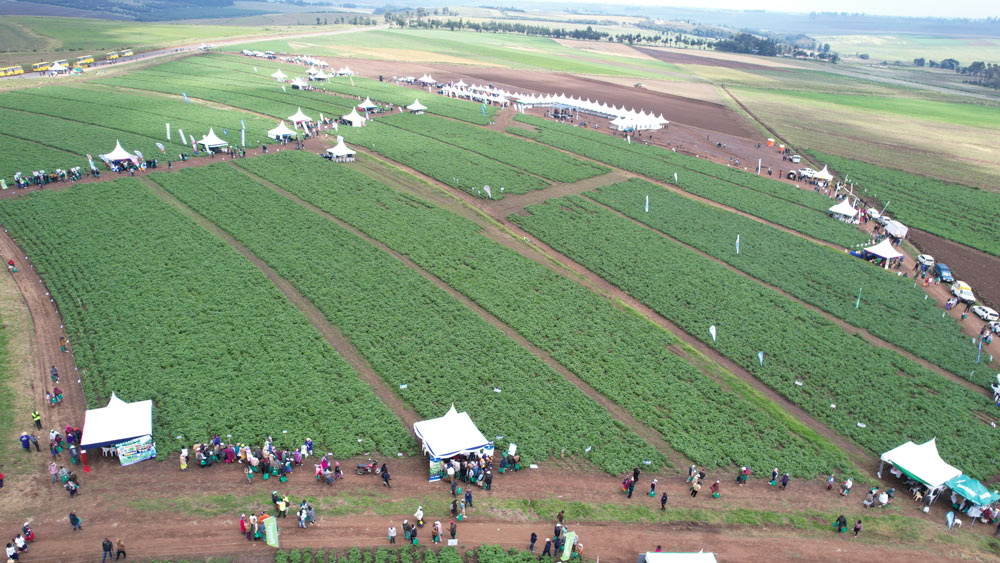
Photos courtesy of Fresh Crop Marketing and the World Potato Congress organising committee.

Call for Abstracts
Deadline: 20th May
Registration Open
Early Deadline: 1st July
For any questions regarding your participation, please contact registration@wpc2026kenya.com, our team will be delighted to assist you.
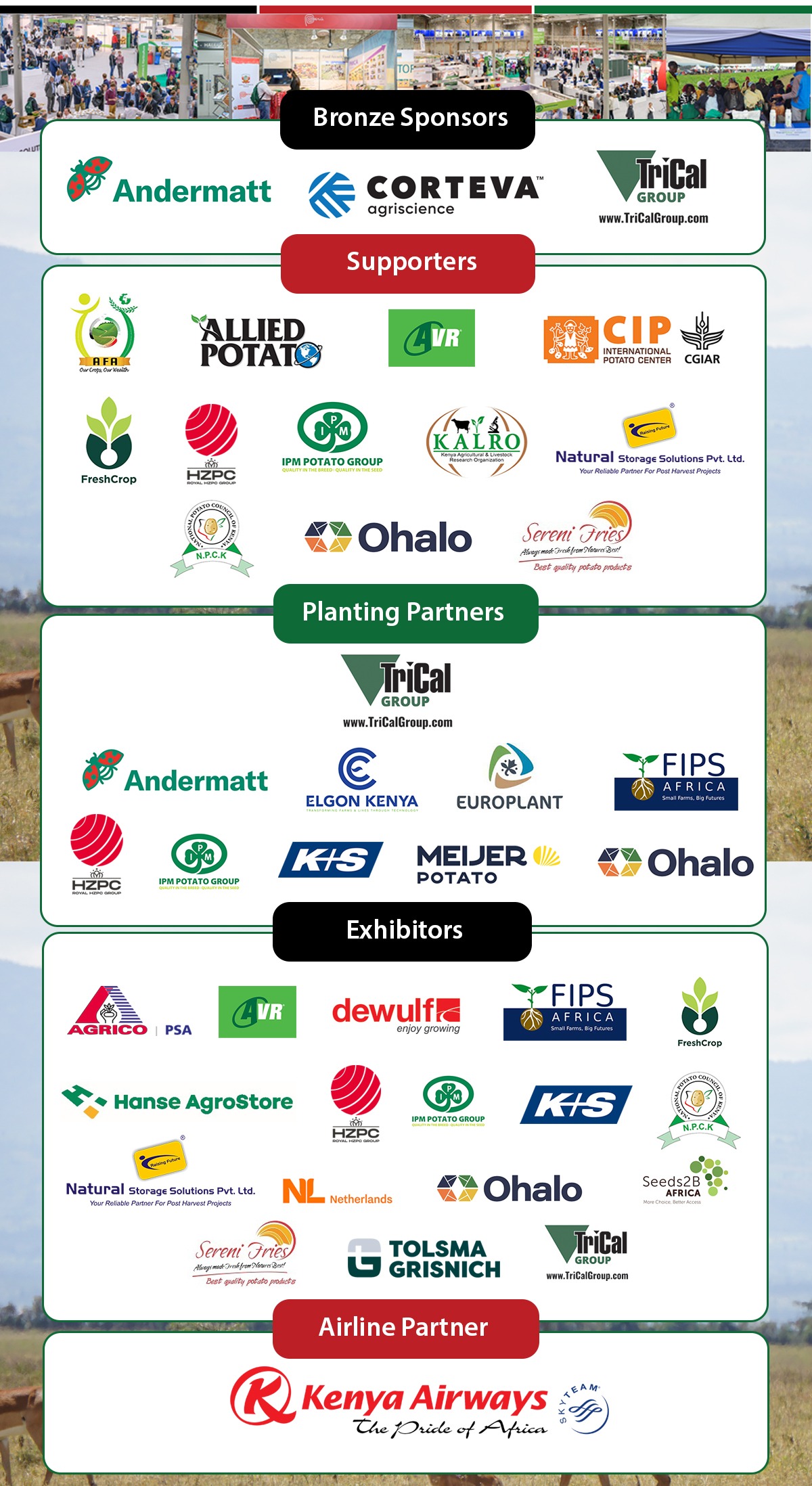
Excited to showcase and say many thanks to some of our initial WPC 2026 Kenya Sponsors, Planting Partners & Exhibitors:

Showcase. Connect. Grow.
Connect with a global audience of 1,000+ international delegates, including policymakers, researchers, agribusiness leaders, and investors, alongside 1,500+ local farmers at WPC 2026. Secure Your Place Today!
Email: partners@wpc2026kenya.com
Sponsorship & Exhibition Opportunities – Contact Us
Please be aware of unauthorized agencies acting as agents for WPC 2026. Keynote PCO is the official professional conference organizer for this event. Only consult our official website to obtain information about the congress in Kenya.
This year’s Congress has so much to offer attending delegates and accompanying guests. As this year’s host, Kenya looks forward to seeing you at the 13th World Potato Congress!

 13th WORLD POTATO CONGRESS
KENYA: 26-30 OCTOBER 2026
Visit the WPC 2026 website: wpc2026kenya.com

Find more information on our
Current Partners
and how to
Become a WPC Sustaining Partner
Thank you
to our
WORLD POTATO CONGRESS SUSTAINING PARTNERS
for their on-going support of our initiatives
"Around the Globe" - Sponsorship and Networking Success Stories
On Monday, a call went out for deliberate efforts to increase potato and sweet potatoes production for sustainable nutritious food systems in Africa. These statements were made at the opening…
The World Potato Congress is pleased to announce that Mr. Lu, Xiaoping has accepted to become WPC’s newest International Advisor. Mr. Lu, Xiaoping, joined the International Potato Center (CIP) in…
Ireland and a World Potato Congress are completely synonymous. Because of history and tradition, Ireland’s relationship with the potato is unique. In the late sixteenth century, the potato made its…
BY LUKIE PIETERSE ON MARCH 17, 2019 Representatives of the Northern Ireland Potato Stakeholder Group recently met with members of the Irish Potato Federation who are coordinating the 11th World Potato Congress taking…
World Potato Congress President, Romain Cools is very pleased to welcome Dr. Nigel Crump to its International Advisory Committee. “Dr. Crump is an excellent addition to our highly respected professional…
This is a reminder to mark your calendars for the second World Potato Congress Inc. (WPC) webinar, to be held on Friday, March 8, 2019 at 09:00 a.m. Eastern Standard…
A recent report on improving global diets in a sustainable way has gathered a lot of attention, both positive and negative. EAT-Forum advocated a big switch to plant-based foods, but…
“Opening the Earth: The Potato King” is a documentary about Peruvian Julio Hancco, one of the few remaining true guardians of biodiversity left in the world. Of the film’s acceptance…
World Potato Congress President, Romain Cools is very pleased to introduce Dr. André Devaux as the newest WPC International Advisor. “André is a man who has illustrated he can act…
World Potato Congress President, Romain Cools along with the WPC Board of Directors are extremely pleased to welcome the J.R. Simplot Company as its newest Platinum Sustaining Partner. President Cools…