
News

World Potato Congress Launches Legacy Program for Kenya WPC 2026 – Growing the Future
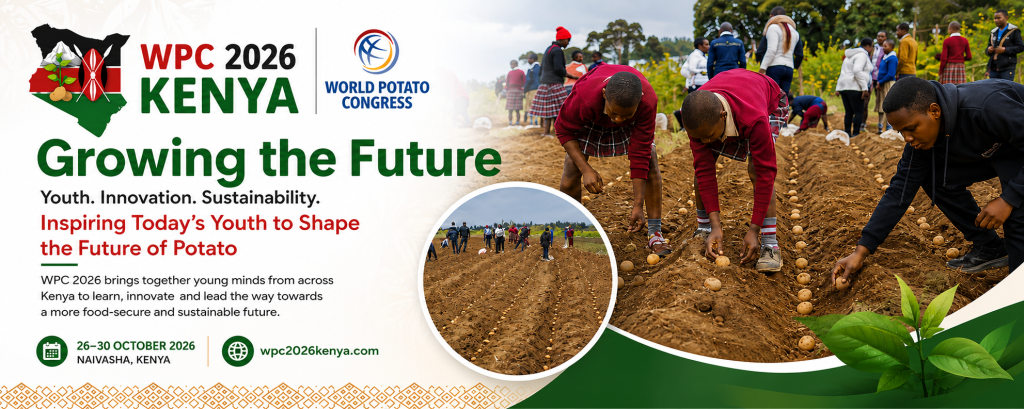
The 13th World Potato Congress is delighted to introduce the WPC 2026 Youth Engagement & 4K Club Program, an exciting legacy initiative designed to educate young people on how to produce potatoes in an effort to alleviate food insecurity, not only a local concern in Kenya, but a global one as well.
The World Potato Congress Inc. and the WPC 2026 Local Organizing Committee wish to create a meaningful legacy with the 2026 and future Congresses, and are pleased to be launching this initiative in Kenya.
Growing the Future
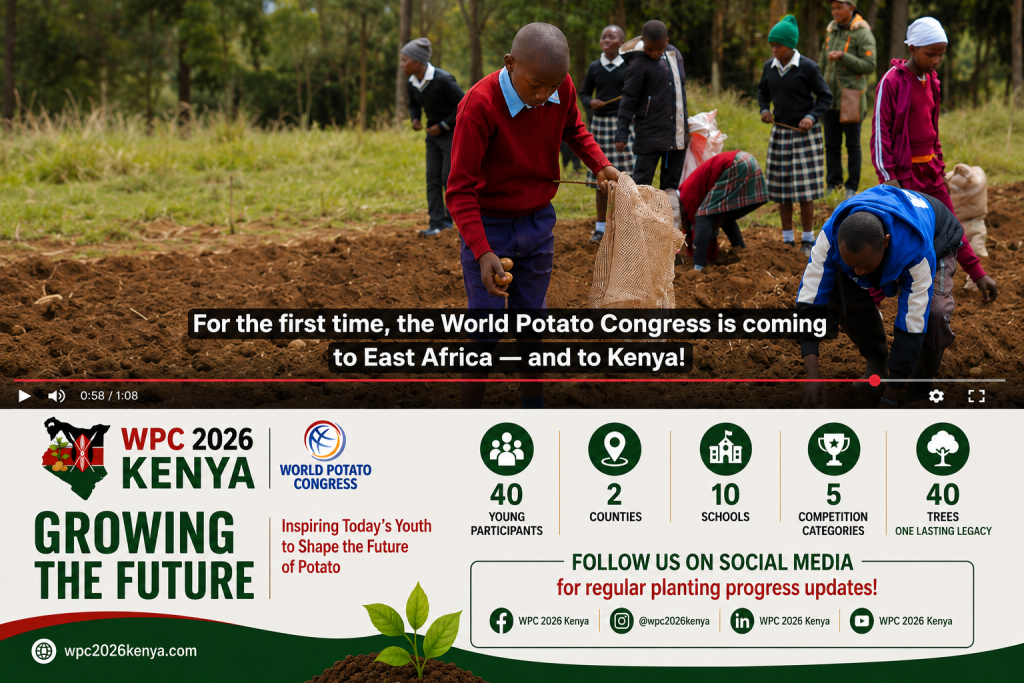
40 Young Participants | 2 Counties | 10 School Demonstration Plots | 5 Competition Categories | 40 Trees
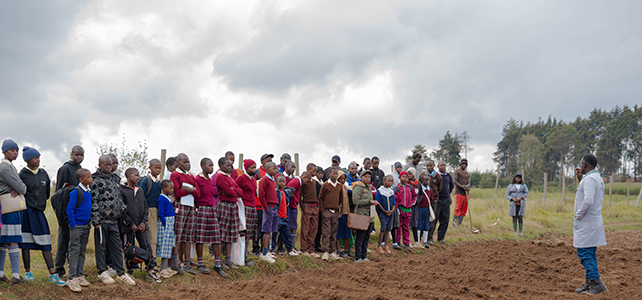
This legacy program is bringing together 40 4K Club members from Nairobi and Nakuru Counties, connecting young people from urban and rural communities and creating a bridge between agricultural production and food consumption.
These 40 members represent ten participating 4K Club schools in Nakuru County, taking part in a demonstration plot and capacity building program, working alongside agricultural specialists to develop practical skills in land preparation, certified seed production, soil health management, integrated pest control, agricultural record-keeping and Good Agricultural Practices.
“In late July, participants gathered at FreshCrop Farm to learn about potato production and kick off the planting process,” says Ashley Gasperi of FreshCrop, who is leading the initiative. “We are deeply grateful for the support of the national Ministry of Agriculture, Livestock and Fisheries (MOALF), the Nakuru County Department of Agriculture, Livestock, Fisheries and Veterinary Services (MOALF), the National Potato Council of Kenya (NPCK), and KALRO. We also appreciate our partnership with the NGO Teens Voice Africa and media partner Akili Kids, alongside the many seed, fertilizer, and crop protection companies empowering youth with hands-on agricultural knowledge and skills.”
Selected participants will also join international delegates at the main World Potato Congress, experience the exhibition and Youth & Women Session, and connect with organizations and leaders from across the global potato industry.
All 40 participants will then come together at the WPC 2026 Farmers Field Day at FreshCrop on Thursday, 29 October.

Investing in young people means investing in the future of our food systems.
“During our recent visit to Kenya, we were excited to learn about the 4K program and brainstormed how we might engage youth in learning how to grow potatoes and other crops,” says WPC Inc. Executive Director Ellen Kouwenberg. Similar to 4-H, a youth program active in North America, Europe, and other regions, the Kenya 4K program is a school-based agricultural initiative focused on both practical skill development and community service. Many of the WPC Inc. Sustaining Partners and Congress supporters are familiar with this agriculture program for youth. This initiative is a first step and will aid in alleviating hunger and provide a source of income for families and communities. We hope to leave an ongoing legacy in Kenya and continue with this program at future World Potato Congress events.”
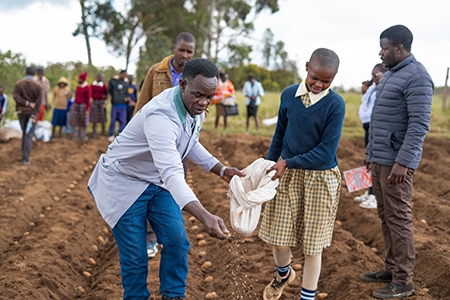
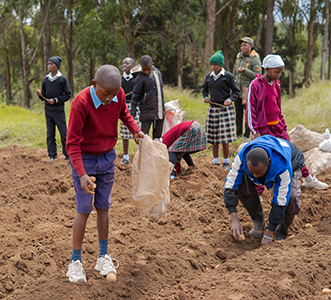
4K members planting potatoes as part of the “Growing the Future” challenge
4K youth will showcase their creativity, knowledge and skills across five categories:
Best Nutrition Promotion Video • Best Potato Dish Video • Best Artwork • Best Demonstration Plot • Best Agricultural Record-Keeping
40 Members. 40 Trees. One Lasting Legacy.
The ambition extends beyond 2026. Performance, leadership and engagement through the program will also provide a potential pathway towards selection as WPC Youth Ambassadors for the 14th World Potato Congress in Belgium in 2028, subject to sponsorship and a competitive selection process.
In addition, each participant will plant a commemorative tree, creating a living reminder of WPC 2026 and our shared commitment to young people, the 4K program, sustainability and the future of agriculture in Kenya.
The future of the potato industry depends on the knowledge, creativity and leadership of the next generation. Through the “Growing the Future” Legacy Program, WPC 2026 will give young people an opportunity to learn, participate, and experience first-hand the enormous potential of agriculture and the potato value chain.
(opens in new tab)
Video Reel Growing the Future Launch Day 2026
Discover the WPC 2026 Legacy Program(opens in new tab)
Be Part of the Legacy
Register for WPC 2026 and connect with the young leaders of tomorrow.
WPC 2026 will bring together the global potato community in Kenya this October: industry leaders, growers, researchers, policymakers, businesses and development organizations, alongside the next generation who will shape the future of our industry.
By joining us in Naivasha, you will have the opportunity to connect with these emerging young leaders, share knowledge and experience, and help inspire the next generation to see the opportunities available across agriculture and the potato value chain.
Register Now for WPC 2026(opens in new tab)
Help More Young Leaders to Take Part
We also invite organizations participating in WPC 2026 to go one step further and support the Congress Legacy Program through bursary funding.
Bursary support will help us remove financial barriers to participation and extend this opportunity to more young people, enabling them to experience the World Potato Congress, engage directly with international industry leaders and gain practical knowledge and inspiration that they can take back to their schools and communities.
By supporting a young participant, your organization will be investing directly in the next generation of growers, innovators, entrepreneurs and food-system leaders, while helping WPC 2026 create a meaningful legacy that extends far beyond the Congress itself.
Help us open the doors to more young leaders.
Email: partners@wpc2026kenya.com
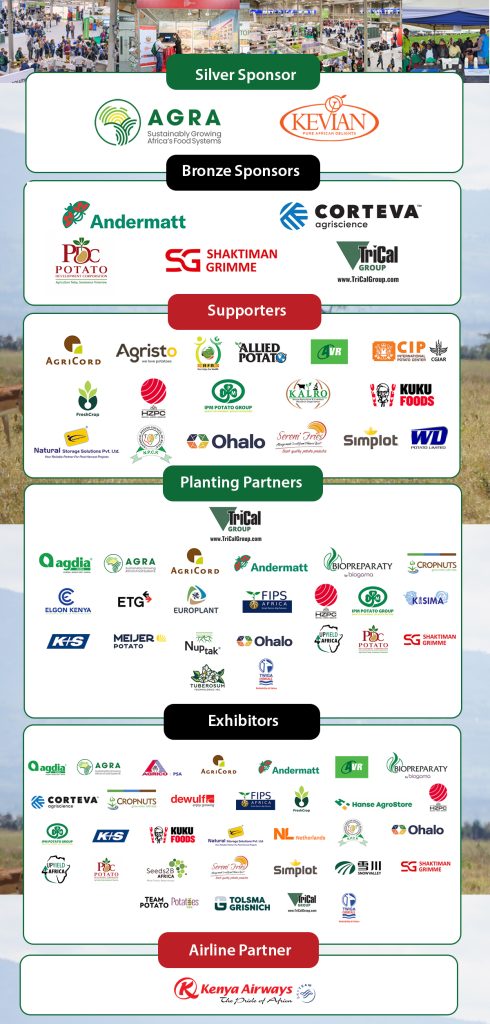
With the Support of Our WPC 2026 Partners
We are grateful to the organizations already supporting WPC 2026 and helping us deliver an international Congress with a meaningful and lasting impact in Kenya.
Sponsorship & Exhibition Opportunities – Contact Us(opens in new tab)
Please be aware of unauthorized agencies acting as agents for WPC 2026 Kenya. Keynote PCO is the official professional conference organizer for this event. Only consult our official website to obtain information about the congress in Kenya.
WPC 2026 Official Website(opens in new tab)
This year’s Congress has so much to offer attending delegates and accompanying guests. As this year’s host, Kenya looks forward to seeing you at the 13th World Potato Congress!

 13th WORLD POTATO CONGRESS
KENYA: 26-30 OCTOBER 2026
Visit the WPC 2026 website: wpc2026kenya.com

Find more information on our
Current Partners
and how to
Become a WPC Sustaining Partner
Thank you
to our
WORLD POTATO CONGRESS SUSTAINING PARTNERS
for their on-going support of our initiatives
"Around the Globe" - Sponsorship and Networking Success Stories
Under the theme ‘The Changing World of the Potato, the 11th World Potato Congress (WPC) will take place in Dublin (Ireland) from 31st May to 3rd June 2021. WPC Inc.…
On August 18, 2020, a meeting was held in Zhaotong city, China. World Potato Congress (WPC) President Roman Cools, Dr. Peter VanderZaag, WPC Secretary and Brian Douglas, General Manager attended…
The President and CEO of the World Potato Congress Inc. (WPC), Mr. Romain Cools, Belgium and the Chairman of the WPC Industry Awards Committee, Mr. Tamas Houlihan, Executive Director of…
The World Potato Congress Inc. Board of Directors is extremely pleased to announce Potatoes South Africa as WPC’s first Sustaining Partner from Africa. President & CEO Romain Cools stated: “With…
Romain Cools, President and CEO of the World Potato Congress Inc. (WPC) is pleased to announce that three new Directors are being be appointed to its Board effective July 1,…
World Potato Congress Inc. Webinar June 25, 2020 at 09:00 a.m. Eastern Standard Time with Burkhard Kuhlmann Presenting: “Mechanisation Levels for the Global Potato Industry” The World Potato Congress Inc.…
The World Potato Congress Inc. (WPC), a global potato network, is leading numerous local potato driven initiatives in developing regions of the world in response to growing food security concerns…
COVID-19 has shaken the whole world impacting society and the global economy similar to the effect of a world war. Among many economic sectors, the frozen potato products value chain…
World Potato Congress Webinar May 05, 2020 at 09:00 a.m. Eastern Standard Time with Dr. Monica Parker Presenting: “Diversified Use of Apical Cuttings to Boost Potato Seed Systems” World Potato…
WPC is pleased to continue its webinar series and is extremely pleased to have Dr. Alex Karasev present “Potato Viruses: An Update”. ABSTRACT Viruses affect potato in two ways, by…